What Stress Does to Hair, Focus and Metabolism
Stress rarely stays in one place. It may begin with a deadline, a difficult conversation, too little sleep or a week that simply asks for more than usual, but the body does not neatly file that experience under “mental health” and move on. Stress can influence how clearly you think, how hungry you feel, how much energy you have and, sometimes much later, what happens to your hair.
What makes this particularly confusing is that these effects do not necessarily appear at the same time. Focus can disappear almost immediately. Appetite can change within the same day. Hair may not tell the story until months later. Different systems, different timelines, one body.
Stress Is Not Just a Feeling
We often talk about stress as though it exists entirely in the mind. In reality, the stress response involves the whole body. When something feels demanding or threatening, the nervous system and hormonal systems respond in ways designed to help us deal with the situation in front of us. In the short term, that response can be useful. The problem is that modern stress does not always end when the immediate moment has passed.
A difficult week can become a difficult month. The inbox keeps filling. Sleep gets shorter. Meals become less regular. Exercise disappears from the calendar. You may technically be coping, but the body is still adapting to a different set of demands. This is one reason prolonged stress can feel so different from one stressful afternoon.
What Stress Can Do to Focus
One of the first places stress often becomes noticeable is concentration. You sit down to work and discover that the task you would normally finish in an hour somehow takes three. You read the same paragraph repeatedly. You move between tabs without quite remembering why you opened any of them.
Stress can make it harder to sustain attention because part of the brain’s resources are already occupied with whatever feels urgent. Even when you are trying to concentrate on something else, the unresolved problem may continue running quietly in the background. Add notifications, task switching, inadequate sleep and too many decisions, and mental clarity can quickly feel harder to reach.
This is also why feeling stimulated is not necessarily the same thing as feeling focused. A stressful day can make you feel extremely alert while leaving you unable to stay with one thought for very long. Sometimes the brain does not need more stimulation. It needs fewer competing demands.
Where NOA Focus Fits In
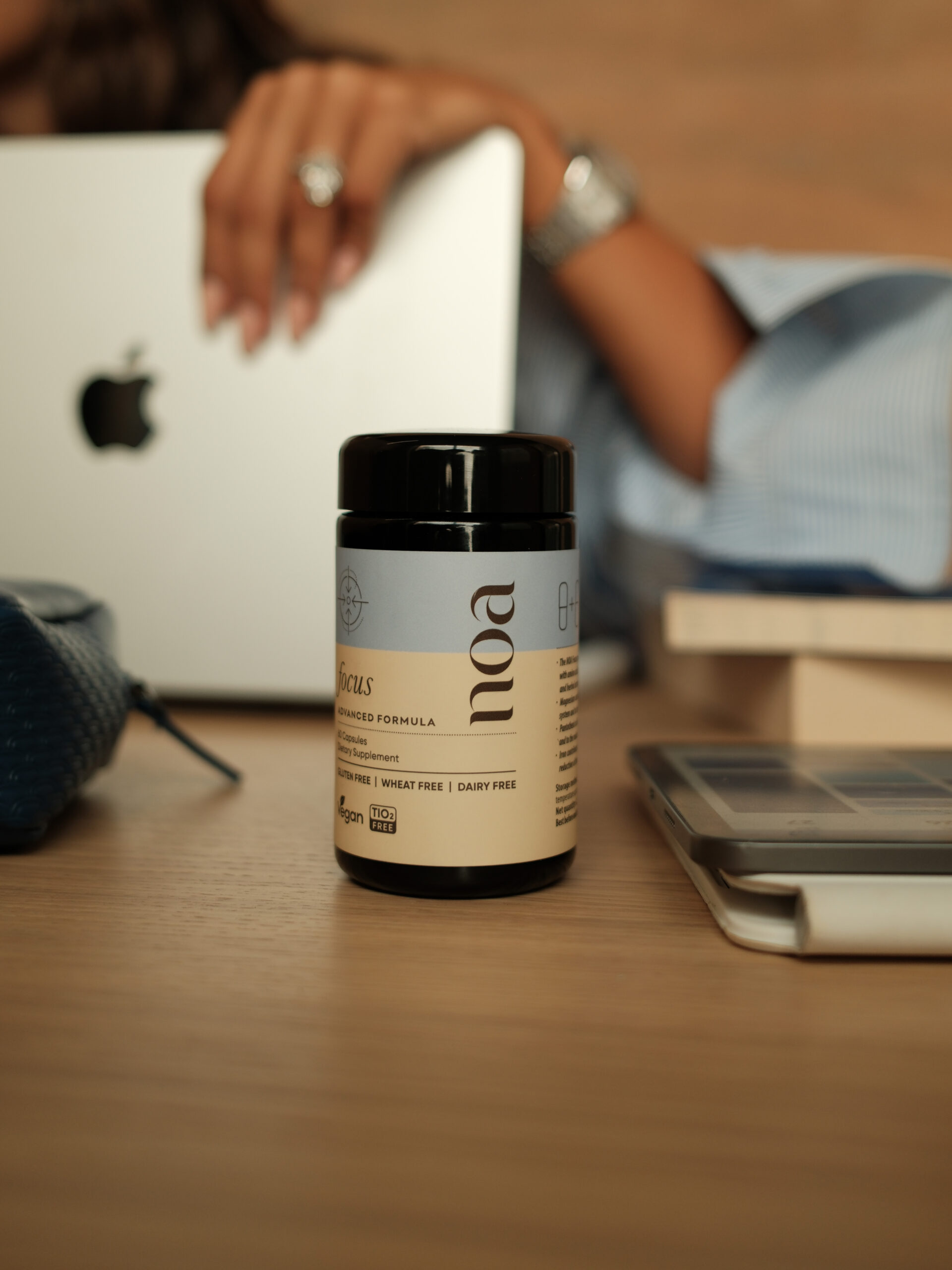
Supporting focus begins with the things no supplement can replace: sleep, regular nutrition, movement, breaks and enough uninterrupted time to actually concentrate. NOA Focus is designed to sit alongside those foundations as daily nutritional support for cognitive function and mental performance.
The formula combines amino acids, minerals, botanical ingredients and Lion’s Mane. It includes magnesium, which contributes to normal nervous system function and the reduction of tiredness and fatigue, pantothenic acid, which contributes to normal mental performance, and iron, which contributes to normal cognitive function. NOA Focus contains no caffeine, which matters because the aim is not to create another short-lived jolt of stimulation but to support the nutritional side of mental performance as part of a consistent routine.
It cannot remove an unreasonable workload or silence twenty notifications. But when the broader routine is in place, nutritional support can be one part of the picture.
What Stress Can Do to Appetite and Metabolism
Stress does not affect everyone’s appetite in the same way. Some people lose interest in food completely when life becomes intense. Others become hungrier, crave more energy-dense foods or find themselves eating differently than usual. Neither response is particularly surprising.
Part of the explanation is biological, but part of it is also behavioural. Stress changes routines. Breakfast gets skipped because the morning starts badly. Lunch moves later because a meeting runs over. Coffee replaces food. Sleep gets shorter. By late afternoon, hunger feels much more intense and the easiest option becomes increasingly attractive.
This is why it can be misleading to look at appetite in isolation. Hunger is influenced by what happened earlier in the day, how much you slept, how regularly you ate and what your body has been asked to handle. What looks like a sudden lack of discipline may simply be the predictable result of a day with very little structure.
Where NOA Slim Fits In
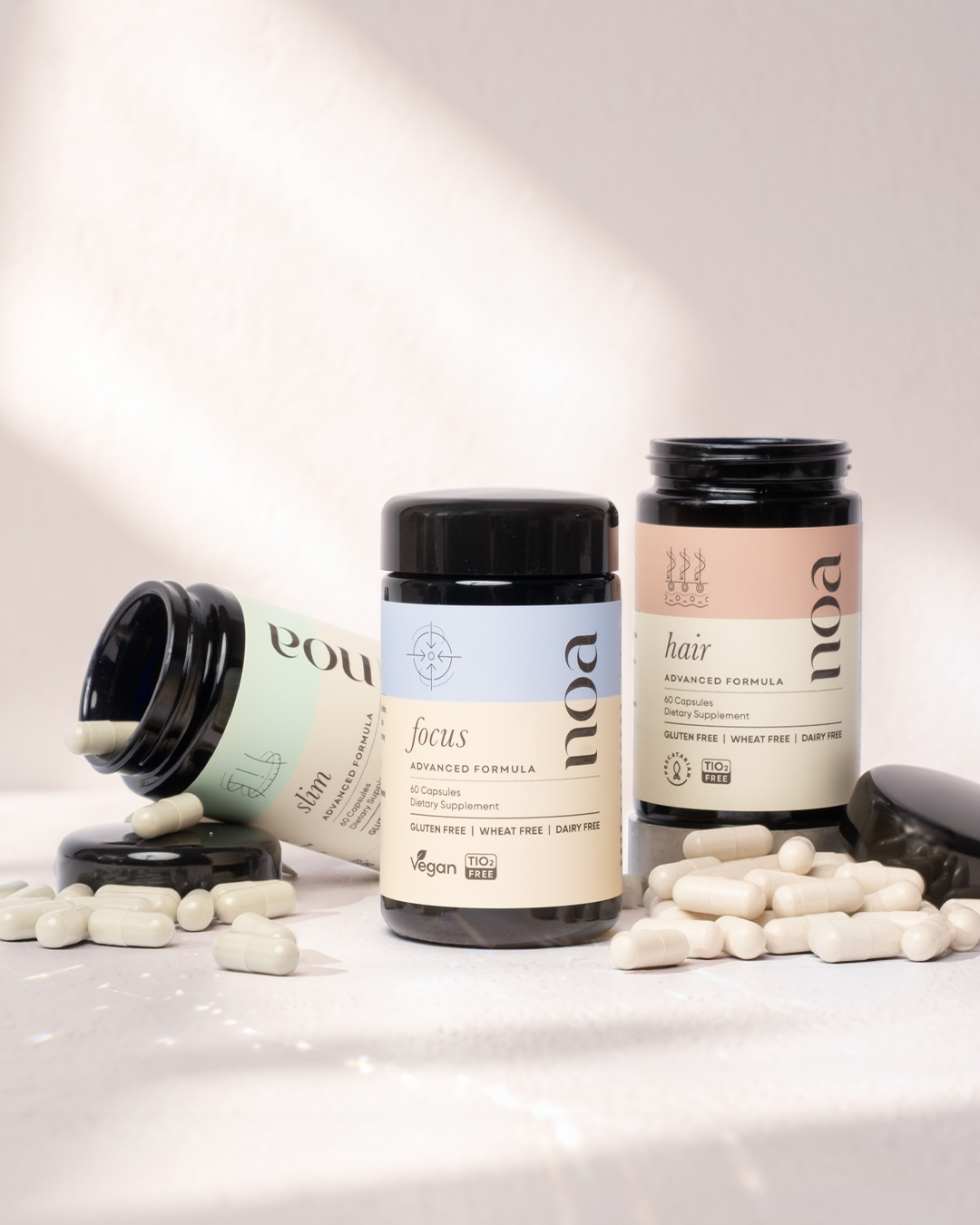
NOA Slim was developed to support metabolism and everyday metabolic wellbeing as part of a balanced routine. Its formula includes chromium, which contributes to normal macronutrient metabolism and the maintenance of normal blood glucose levels, together with zinc and a combination of plant-based ingredients including green tea, ginger, cinnamon, cayenne, nettle and black pepper.
That does not mean NOA Slim can “cancel” stress or switch off stress-related cravings. Nor should it replace meals, movement, adequate sleep or a varied diet. Its role is to provide metabolic support alongside the habits that matter most.
This distinction is important because metabolism is often discussed as though it were a switch that needs to be turned on or off. In reality, metabolic health is shaped by the broader pattern: what and how regularly you eat, how much you move, how well you sleep and what the rest of your lifestyle looks like over time.
What Stress Can Do to Hair
Hair has a particularly interesting relationship with stress because the timeline can be completely different from what happens with concentration or appetite.
A period of significant emotional or physical stress can sometimes affect the hair growth cycle, but the visible change may not appear immediately. Increased shedding associated with telogen effluvium, for example, can become noticeable weeks or even months after the original trigger.
This is why hair changes can feel so mysterious. By the time you notice more hair in the shower, the difficult period may already be over. You may be sleeping properly again and feeling much better, yet the follicles are only now completing a process that began earlier.
Stress can also indirectly influence hair through the way it changes everything around it. Poor sleep, irregular meals, restrictive eating and changes in general health can all become part of the wider picture. Hair rarely exists separately from the rest of the body.
Where NOA Hair Fits In
NOA Hair is designed as daily nutritional support for normal hair. The formula contains biotin, selenium and zinc, which contribute to the maintenance of normal hair, alongside additional ingredients including iron, vitamin C, copper, bamboo extract, MSM, hydrolysed fish collagen and quince fruit powder.
Just as NOA Focus cannot remove a stressful schedule and NOA Slim cannot replace healthy eating habits, NOA Hair is not an overnight solution for stress-related shedding. Hair operates on a much slower timeline. Nutritional support makes most sense when it is consistent and when it sits alongside adequate nutrition, sleep, gentle hair care and professional assessment where persistent hair changes suggest something else may be happening.
When it comes to hair, patience is not a very exciting answer. It is often an important one.
Three Systems, Three Different Timelines
One reason stress can be difficult to understand is that the body does not respond everywhere at once. Mental focus may feel different today. Appetite may change this afternoon. Hair may show the effects several months from now.
That means we can easily treat each symptom as a separate problem. We buy something for concentration, change our diet because of cravings and panic when shedding begins, without realising that the same difficult period may have contributed to all three.
This does not mean stress is the explanation for every change in the body. It is not. Persistent symptoms always deserve to be looked at properly rather than automatically blamed on being busy. But recognising the connections can help us think more clearly about what the body needs.
The Body Does Not Work in Categories
Wellness often encourages us to think in separate departments. Hair health. Mental performance. Metabolism. Sleep. Stress. Energy. In real life, those categories overlap constantly.
A bad night can affect concentration and appetite the next day. A stressful period can change eating patterns. Inadequate nutrition can affect energy. Long periods of physiological stress can sometimes influence the hair cycle. One system rarely operates without interacting with another.
This is also the philosophy behind the NOA range. Hair, Slim and Focus address different needs, but they belong to the same bigger idea: supporting the body consistently rather than waiting for one dramatic solution to fix everything.
That does not mean taking more products is always the answer. Often the most useful thing you can do is look at the foundations first.
Are you sleeping enough? Are you eating regularly? Are you moving? Are you giving your brain any uninterrupted time? Has something changed in your health? Have you been under more pressure than usual for longer than you realised?
Those questions may seem basic. Basic does not mean unimportant.
The Bigger Picture
Stress is not always avoidable. There will be deadlines, difficult periods, interrupted sleep and weeks when the carefully designed routine disappears completely. The goal cannot realistically be to create a life in which nothing stressful ever happens.
A better goal may be to notice what changes when it does.
Maybe your attention becomes fragmented. Maybe your appetite gets louder. Maybe you forget to eat. Maybe several months later your hair seems different. These signals do not automatically mean something is wrong, but they can be useful information about what the body has been dealing with.
Support does not have to mean one dramatic intervention. Sometimes it means eating lunch before 4pm. Sometimes it means turning off notifications. Sometimes it means going to bed. Sometimes it means adding targeted nutritional support to a routine that already has the basics in place.
And sometimes it simply means recognising that hair, focus and metabolism were never three completely separate stories in the first place.
FAQ
Can stress affect both focus and appetite?
Yes. Stress can influence attention, sleep, appetite and everyday behaviour, although people respond differently. Some people eat more during stressful periods, while others experience reduced appetite.
Can stress affect hair months later?
It can. Certain forms of increased shedding, including telogen effluvium, may become noticeable several weeks or months after a significant physical or emotional stressor.
Can supplements remove the effects of stress?
No. Supplements should not be viewed as a replacement for sleep, nutrition, movement, stress management or medical care. Their role is to provide targeted nutritional support alongside a healthy lifestyle.
Which NOA product is designed for cognitive support?
NOA Focus is formulated to support cognitive function and mental performance and contains no caffeine.
Which NOA product supports normal hair?
NOA Hair contains biotin, selenium and zinc, which contribute to the maintenance of normal hair.
What is NOA Slim designed to support?
NOA Slim is designed to support everyday metabolic wellbeing and contains chromium, which contributes to normal macronutrient metabolism and the maintenance of normal blood glucose levels.