Can Stress Change Your Hair Months Later?
You survive the stressful period. The deadline passes. The difficult month ends. Life becomes calmer and, just when you think everything is finally back to normal, you start noticing more hair in the shower. It can feel completely unrelated. After all, the stressful event happened weeks ago. Maybe even months ago. But hair does not always react in real time.
One of the most important things to understand about hair is that what you see today may reflect what was happening inside the body much earlier. That delay is one reason sudden shedding can feel so confusing. By the time the hair changes become visible, the trigger may already feel like old news.
Your Hair Has Its Own Timeline
Hair grows in cycles. Individual follicles move through periods of active growth, transition, rest and eventually shedding. Most of the time, those cycles happen quietly enough that we barely notice them.
A significant physical or emotional stressor can sometimes disrupt that rhythm. A larger number of hairs may move from the active growth phase into the resting phase, eventually leading to increased shedding. This is known as telogen effluvium, one of the most common forms of stress-related hair shedding. The American Academy of Dermatology notes that significant stress, illness, surgery, childbirth and other major changes in the body can trigger excessive shedding.
The important part is the timing. Hair does not necessarily begin falling out the day something stressful happens. In telogen effluvium, noticeable shedding often appears around two to three months after the trigger. Cleveland Clinic describes this delayed pattern as typical, which is why people may struggle to connect what they are seeing now with what happened several months earlier. Your hair, apparently, keeps receipts.
The Stress May Be Over Before the Shedding Begins
Imagine you had an unusually difficult June. You were working too much, sleeping badly and dealing with a major personal or professional change. By September, things may be completely different. You are sleeping again. The stressful situation has passed. You feel better. And then your hair starts shedding.
That delay can make the experience particularly frustrating because it seems as though the body is reacting at exactly the wrong moment. In reality, the follicles may simply be completing a process that began months earlier. This is also why looking only at what happened this week rarely gives you the whole picture when hair suddenly changes. Sometimes the more useful question is: What was happening two or three months ago?
Stress Is Not Only Emotional
When we hear the word stress, we often think immediately of work, relationships or anxiety. But the body has a much broader definition. A high fever can be a stressor. Surgery can be a stressor. Significant weight loss, illness or major hormonal changes can all place additional demands on the body. The American Academy of Dermatology includes several of these among common triggers for excessive hair shedding.
This matters because someone may genuinely say, “But I haven’t been stressed,” while overlooking the fact that they were ill three months earlier, dramatically changed their diet or went through another substantial physical change. Your follicles are not particularly interested in whether the stress appeared in your calendar under the word stress. They respond to what is happening in the body.
Why Stress Can Affect the Hair Cycle
Hair is biologically active tissue while it is developing inside the follicle, and producing hair requires energy and nutrients. During periods of significant physiological stress, the body may temporarily shift priorities. Hair growth is not essential for immediate survival, which means the hair cycle can be affected when the body is dealing with larger demands.
This does not mean that every stressful week will cause hair shedding. Most of us would have considerably less hair if that were the case. The type, intensity and duration of the stress matter, as does individual susceptibility. But when enough follicles move into the resting phase around the same time, the eventual shedding can become noticeable several weeks or months later.
More Shedding Does Not Automatically Mean Permanent Hair Loss
This distinction is important. Seeing significantly more hair than usual can be alarming, but telogen effluvium is generally considered temporary. Cleveland Clinic notes that acute telogen effluvium typically resolves and that hair growth usually returns once the trigger has passed and the cycle begins to normalise. That does not mean every case of shedding should simply be ignored.
You survive the stressful period. The deadline passes, the difficult month ends and life finally becomes calmer. Then, just when you think everything is back to normal, you start noticing more hair in the shower, on your brush or on your clothes. It can feel completely unrelated. After all, the stressful period happened weeks ago, perhaps even months ago. But hair does not always react in real time. One of the most important things to understand about hair is that what you see today may reflect what was happening inside the body much earlier. That delay is one reason sudden shedding can feel so confusing: by the time the change becomes visible, the trigger may already feel like old news.
Your Hair Has Its Own Timeline
Hair grows in cycles. Individual follicles move through periods of active growth, transition, rest and eventually shedding. Most of the time, these cycles happen quietly enough that we barely notice them. A significant physical or emotional stressor, however, can sometimes disrupt this rhythm. A larger number of hairs may move from the active growth phase into the resting phase, eventually leading to increased shedding. This process is known as telogen effluvium and can occur after periods of significant stress, illness, surgery, childbirth and other substantial changes in the body.
The important part is the timing. Hair does not necessarily begin shedding the day something stressful happens. With telogen effluvium, noticeable shedding often appears two or three months after the original trigger. This is why it can be difficult to connect what you are seeing in the mirror today with something that happened earlier in the year. Your hair, apparently, keeps receipts.
The Stress May Be Over Before the Shedding Begins
Imagine you had an unusually difficult June. You were working too much, sleeping badly and dealing with a major personal or professional change. By September, things may look completely different. You are sleeping again, the stressful situation has passed and you feel more like yourself. Then your hair starts shedding.
That delay can make the experience particularly frustrating because it seems as though the body is reacting at exactly the wrong moment. In reality, the follicles may simply be completing a process that began months earlier. This is why looking only at what happened this week rarely gives you the whole picture when hair suddenly changes. Sometimes the more useful question is not “What am I doing differently now?” but “What was happening two or three months ago?”
Stress Is Not Only Emotional
When we hear the word stress, we usually think about work, relationships, anxiety or an overflowing calendar. The body has a much broader definition. A high fever can be a stressor. Surgery can be a stressor. Significant weight loss, illness, major hormonal changes or substantial changes in nutrition can all place additional demands on the body.
This matters because someone may genuinely say, “But I haven’t been stressed,” while overlooking the fact that they were ill several months earlier, dramatically changed their diet or went through another significant physical change. Your follicles are not particularly interested in whether the experience appeared in your calendar under the word stress. They respond to what is happening in the body.
Why Stress Can Affect the Hair Cycle
Producing hair requires energy and nutrients. During periods of significant physiological stress, the body may temporarily shift its priorities, and hair growth is not one of the processes essential for immediate survival. This does not mean every difficult week will suddenly cause excessive shedding. If that were true, most of us would have considerably less hair.
The intensity and duration of the stressor matter, as does individual susceptibility. But when enough follicles move into the resting phase at roughly the same time, the eventual shedding can become much more noticeable. The important thing to remember is that the visible change can arrive long after the event that started it.
More Shedding Does Not Automatically Mean Permanent Hair Loss
Seeing significantly more hair than usual can be alarming, but increased shedding does not automatically mean permanent hair loss. Telogen effluvium is generally temporary, and once the trigger has passed, the normal hair cycle can gradually begin to re-establish itself.
That does not mean every case of shedding should simply be ignored. Hair changes can have many causes, and persistent thinning, patchy hair loss, scalp symptoms or prolonged shedding deserve proper assessment. But temporary increased shedding after a major stressor is not necessarily the same thing as progressive hair loss. Sometimes the follicle has not been permanently damaged; it is simply moving through a disrupted cycle.
The Temptation to Fix Everything Immediately
When more hair starts appearing in the brush, the instinct is understandable. Change the shampoo. Buy a scalp serum. Stop washing your hair. Start washing it more often. Cut it. Do not cut it. Search the internet at midnight and convince yourself that everything is connected.
Hair has a way of making otherwise rational people surprisingly inventive. But if the change began inside the hair cycle months earlier, replacing every product in the bathroom overnight is unlikely to address the whole story. External care still matters, particularly when hair feels fragile. Gentle brushing, less unnecessary heat and avoiding excessive tension can help protect the hair fibre from additional damage. But hair shedding from the follicle and breakage along the length are two different things, and understanding which one you are dealing with matters more than buying another bottle.
Nutrition Is Part of the Story Too
Stressful periods often change much more than our stress levels. Meals become irregular, appetite changes, sleep suffers and convenience begins making more decisions for us than usual. Over time, that can matter because normal hair growth depends on adequate nutrition and a consistent supply of essential nutrients.
This is also where supplements need to be understood realistically. They are not an emergency button for sudden shedding, and they cannot remove an underlying trigger. Nutritional support can, however, be part of a consistent routine aimed at supporting normal hair from within, particularly alongside a balanced diet, adequate sleep and appropriate hair care.
Where NOA Hair Fits In
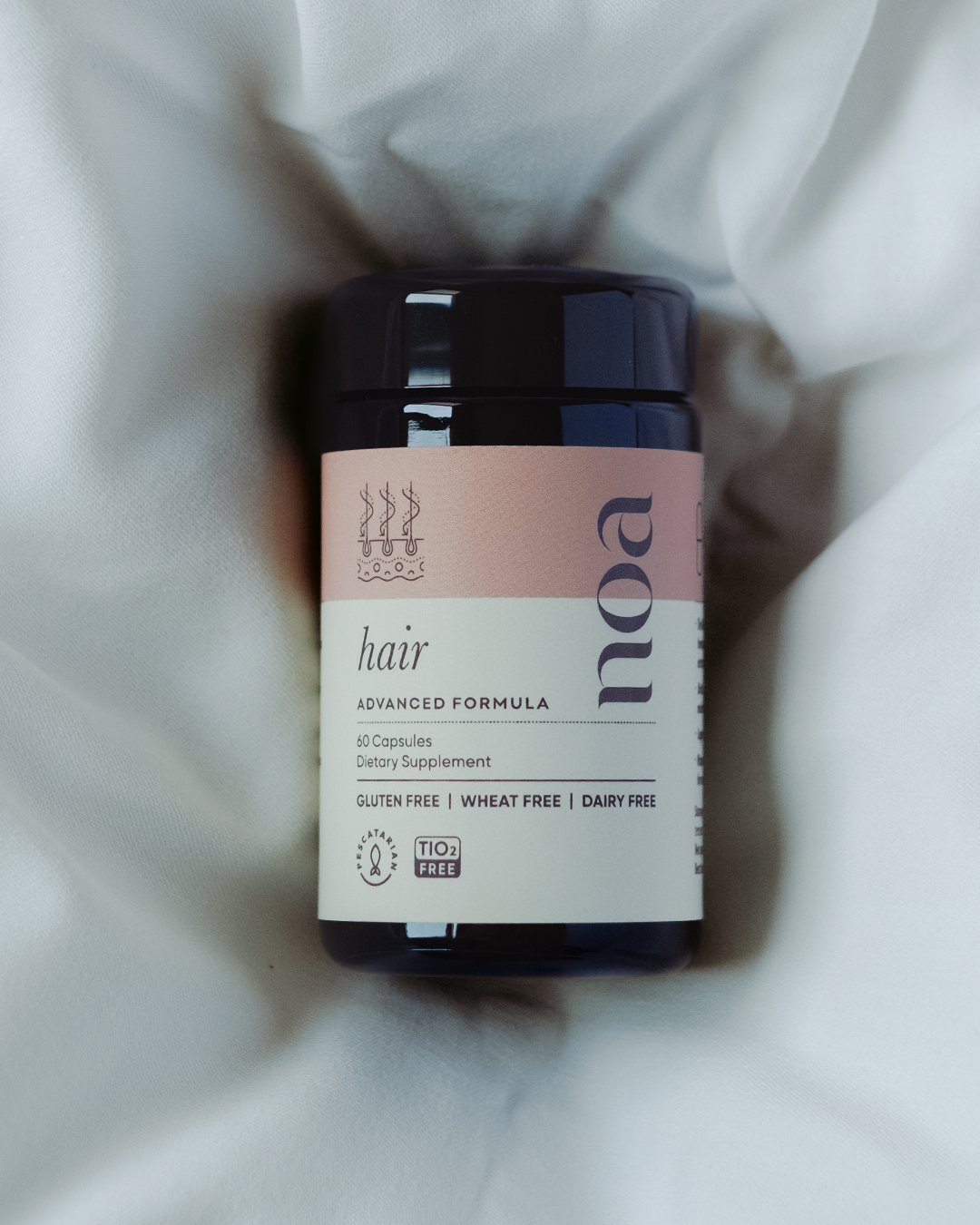
NOA Hair was developed as daily nutritional support for hair, bringing together carefully selected vitamins, minerals and other ingredients in one formula. It contains biotin, selenium and zinc, nutrients that contribute to the maintenance of normal hair, alongside ingredients including iron, vitamin C, copper, bamboo extract, MSM, hydrolysed fish collagen and quince fruit powder.
But timing matters here too. NOA Hair is not designed to stop stress-related shedding overnight, nor should any supplement be positioned as though it can reverse the hair cycle within a few days. Its role is much more realistic: to provide consistent nutritional support as part of a broader approach to hair health. That means looking after nutrition, rest and the hair itself while also paying attention to potential underlying reasons if shedding becomes persistent or unusual. When it comes to hair, consistency generally makes far more sense than panic.
Sometimes Recovery Looks Slow
One of the frustrating things about hair is that progress takes time. Skin can look fresher after a good night’s sleep and energy can feel different after a proper meal, but hair tends to be considerably less cooperative. The hair cycle operates over months, which means both the consequences of a stressful period and the recovery that follows can take time to become visible.
A calmer body today does not necessarily mean your hair will look different tomorrow. In the same way, increased shedding today does not necessarily mean something harmful is happening today. Hair works on a delayed schedule, and understanding that can make changes feel a little less frightening.
When It Is Worth Looking Deeper
Not every change in hair should automatically be blamed on stress. If shedding continues for several months, becomes progressively heavier, causes clearly visible thinning or bald patches, or appears alongside scalp pain, itching, redness or other symptoms, it is worth speaking with a dermatologist or healthcare professional. The same applies when hair changes happen alongside unusual fatigue, significant weight changes or other changes in your general health.
Stress may be one piece of the puzzle, but it should not become the explanation for everything.
The Bigger Picture
We tend to think of stress as something that happens primarily in the mind, but hair is a useful reminder that the body experiences it too. Sometimes the body simply answers on a delay. A difficult period in June may only become visible in your hair in September, by which point you may have forgotten how little you slept, how irregularly you ate or how much your body was dealing with at the time.
That does not mean every stressful experience is destined to appear in the shower drain. It simply means that when hair suddenly changes, looking backwards can sometimes be as useful as looking at what is happening today. Because when it comes to hair, the present is not always where the story began.
FAQ
Can stress really cause hair shedding months later?
Yes. Increased shedding associated with telogen effluvium can become noticeable several weeks or months after a significant physical or emotional stressor because of the way the hair growth cycle works.
Is stress-related shedding permanent?
It is often temporary when it is related to telogen effluvium and the underlying trigger has resolved. Persistent, progressive or unusual hair loss should still be assessed by a healthcare professional.
Can illness also trigger delayed shedding?
Yes. Illness, high fever, surgery, substantial weight changes and major hormonal changes can all act as physiological stressors and may influence the hair cycle.
Can NOA Hair stop stress-related hair loss?
NOA Hair is not a treatment for stress-related hair loss. It is a dietary supplement formulated to provide nutritional support for normal hair and contains biotin, selenium and zinc, which contribute to the maintenance of normal hair.
When should I speak to a doctor about shedding?
If shedding is persistent, progressively worsening, patchy, accompanied by scalp symptoms or occurs together with other changes in your health, it is sensible to seek professional advice.