Why Quick Energy Boosts Don’t Work Long-Term
The Difference Between Feeling Energised and Simply Feeling Stimulated
It’s 3 p.m. Your concentration drops, your to-do list is still long and the easiest solution seems obvious: another coffee or something sweet. For many people, this has become part of everyday life. We reach for something that will help us feel more awake, more alert and ready to keep going. And sometimes it works, at least temporarily.
But there is an important difference between feeling stimulated for a short period of time and supporting the mental energy needed to stay focused throughout the day. Understanding that difference can change the way we approach concentration, mental fatigue and everyday productivity.
Feeling awake isn’t always the same as feeling focused
When concentration starts to disappear, our first instinct is often to look for something that will make us feel more awake. But alertness and focus are not exactly the same thing. You can feel physically awake and still find yourself reading the same sentence three times. You can have enough energy to continue working while struggling to organise your thoughts or stay engaged with one task.
Mental performance depends on more than simply avoiding tiredness. Attention, concentration and the ability to process information are influenced by sleep, nutrition, stress, recovery and the amount of mental stimulation we experience throughout the day. That’s why another quick boost doesn’t always solve the real problem.
Why quick fixes don’t last
Coffee, sweet foods and other sources of temporary stimulation can make us feel more alert for a period of time. But they cannot replace the body’s fundamental need for sleep, balanced nutrition and recovery. If you’ve spent several nights sleeping poorly, worked for hours without a real break or spent the entire day switching between emails, meetings and notifications, temporary stimulation doesn’t remove those demands.
It may simply make them easier to ignore for a little longer. This doesn’t mean that coffee or an afternoon snack is inherently a problem. It simply means that they shouldn’t be confused with a complete strategy for supporting mental performance.
The hidden cost of constant stimulation
Modern life rarely gives our attention a break. We move from work screens to phone screens, from emails to social media, from one notification to the next. Even during moments that are supposed to be restful, our brains are often processing new information.
The result can be an unusual type of tiredness: you may not feel physically exhausted, yet concentrating on one thing becomes increasingly difficult. In those moments, adding more stimulation isn’t necessarily what the brain needs. Sometimes the better answer is less.
A short walk without your phone. A proper meal. Ten minutes away from a screen. A quieter environment. An earlier night. These choices aren’t as immediate as another coffee, but they address something quick fixes often cannot: the need for genuine recovery.
Looking beyond caffeine
Coffee is part of daily life for millions of people and can absolutely fit into a balanced routine. The question isn’t whether you should drink coffee. A more useful question is: what are you asking your coffee to do? If it’s something you enjoy in the morning, that’s very different from repeatedly using caffeine to compensate for inadequate sleep, skipped meals or constant mental overload.
When another cup becomes the automatic response every time concentration falls, it may be worth looking at the broader pattern. How have you been sleeping? When did you last eat? Have you moved today? Have you had any genuine downtime? How many hours have you spent moving between screens? Sometimes the reason we can’t focus has less to do with needing another boost and more to do with needing something our routine is currently missing.
Building more sustainable mental energy
There is no single habit that creates perfect concentration. Mental performance is supported by many small factors working together. Regular sleep provides the foundation for recovery. Balanced nutrition supplies nutrients involved in normal body and brain function. Hydration matters. Movement can break up long periods of sedentary work, while regular breaks give attention an opportunity to reset.
Just as importantly, reducing unnecessary distractions can make it easier to use the mental energy you already have. These habits may not create the dramatic sensation of an instant boost. That’s precisely the point. The goal isn’t to constantly feel stimulated. It’s to create a more stable foundation for focus and mental performance.
Supporting focus from within
Nutrition is another part of that foundation. The brain and nervous system depend on a wide range of nutrients and biological processes to function normally, which is why targeted nutritional support has become an increasingly common part of modern wellness routines.
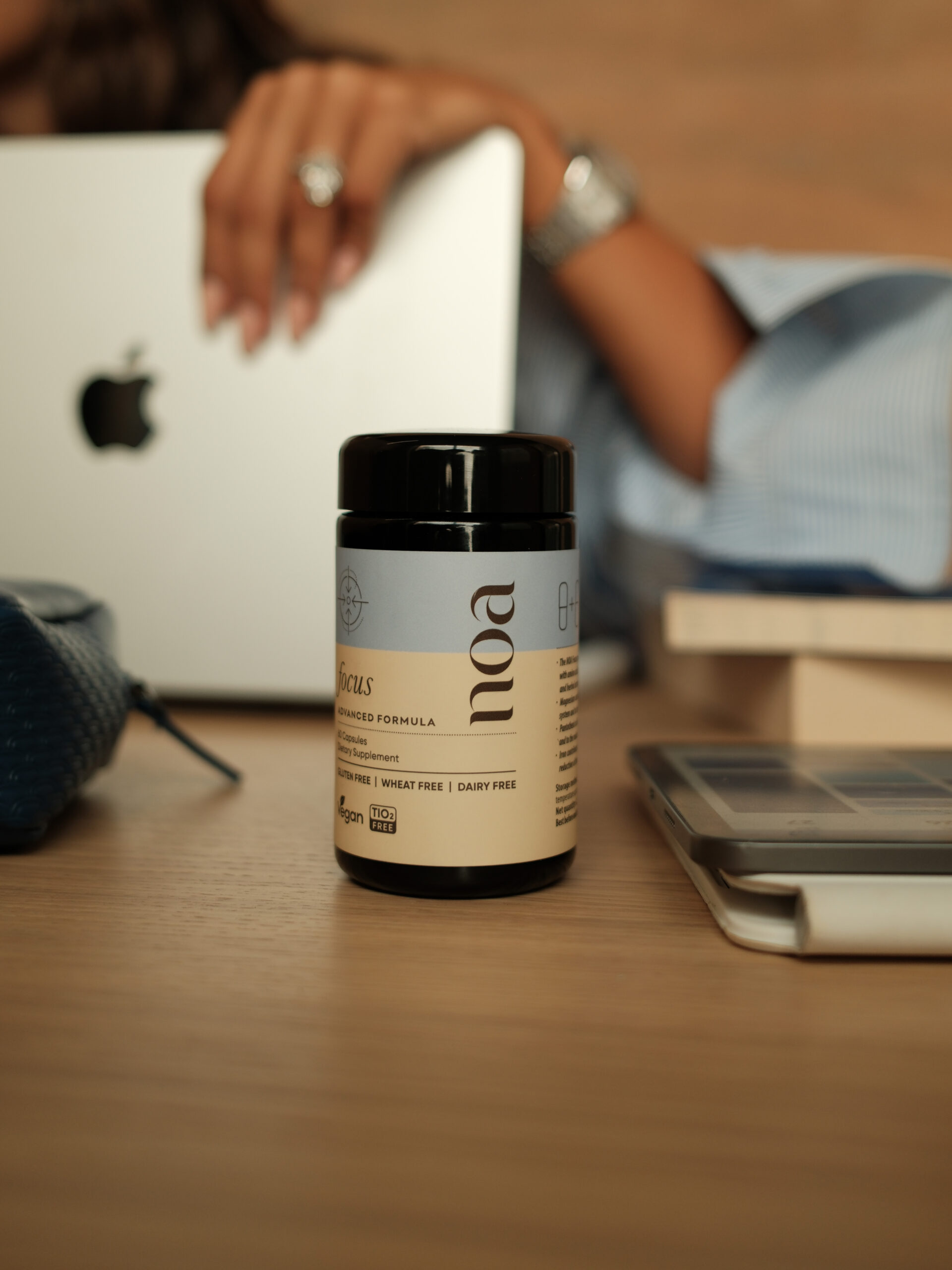
NOA Focus was formulated to support normal cognitive function, mental performance and the reduction of tiredness and fatigue. The formula combines amino acids, minerals, botanical ingredients and mushroom extract, including Bacopa monnieri, L-tyrosine, Lion’s Mane, citicoline, magnesium, Ginkgo biloba, vitamin B5 and iron.
Rather than relying on one ingredient as a temporary “boost”, the formulation brings together multiple ingredients within one supplement. NOA Focus is intended to complement the fundamentals, not replace them. Sleep, balanced nutrition, movement, recovery and healthy daily habits remain essential parts of supporting everyday mental performance.
Stop chasing the feeling of “more”
Wellness culture often encourages us to want more. More energy. More productivity. More concentration. More hours in the day. But supporting mental performance doesn’t necessarily mean pushing ourselves to do more. Sometimes it means creating better conditions for the energy and attention we already have. Instead of asking, “What can give me another boost?”, it may be more useful to ask: “What is making me need one?” That small change in perspective can tell us much more about what our body, and our mind, actually needs.
The Takeaway
Quick boosts can make us feel more alert, but sustainable mental performance is built differently. Sleep, nutrition, hydration, movement, recovery and periods of genuine mental rest all contribute to the way we concentrate and function throughout the day. The goal doesn’t have to be endless energy or perfect productivity. Sometimes the smarter approach is simply creating a routine that allows your brain to perform well without constantly asking it to push harder.
FAQ
Why can I feel awake but still struggle to concentrate?
Alertness and concentration are not exactly the same. Mental performance can be influenced by factors such as sleep, stress, nutrition, recovery and the amount of information or stimulation you’re processing.
Does coffee improve focus?
Coffee may temporarily increase alertness, but it doesn’t replace adequate sleep, nutrition or recovery. How an individual responds to caffeine can also vary.
Why do I keep needing an afternoon energy boost?
There isn’t one universal reason. Sleep, meal patterns, hydration, stress, workload and daily routines can all influence how you feel later in the day.
What is the difference between physical and mental fatigue?
Physical fatigue is associated with tiredness in the body, while mental fatigue may appear as difficulty concentrating, slower thinking or reduced motivation after prolonged cognitive demands. The two can also occur together.
What is NOA Focus?
NOA Focus is a dietary supplement formulated to support normal cognitive function, mental performance and the reduction of tiredness and fatigue.
What ingredients does NOA Focus contain?
NOA Focus contains a combination of amino acids, minerals, botanical ingredients and mushroom extract, including Bacopa monnieri, Coenzyme Q10, L-arginine, L-tyrosine, Lion’s Mane, citicoline, magnesium, Ginkgo biloba, vitamin B5, iron and quince fruit powder.
How should NOA Focus be taken?
The recommended use is two capsules daily, one capsule twice a day, preferably with a meal.
Is NOA Focus a replacement for sleep or a balanced diet?
No. NOA Focus is a dietary supplement intended to complement a healthy lifestyle. It does not replace adequate sleep, balanced nutrition or healthy daily habits.