
Protein, Fibre and Fullness: Why Some Meals Keep You Satisfied Longer
There are meals that seem perfectly adequate when you eat them, only for hunger to return an hour later. Then there are others that quietly carry you through the afternoon without making you think about food every twenty minutes.
The difference is not always the size of the meal.
What we eat can influence how satisfied we feel afterwards, how quickly hunger returns and how much attention food demands for the rest of the day. Protein and fibre are two nutrients that frequently appear in conversations about fullness, but the reason they matter is more interesting than simply saying they “keep you full”.
Satiety is not controlled by one food, one nutrient or one hormone. It is the result of a conversation between the digestive system, the brain, the food we have eaten and what is happening around us.
Fullness Is More Complicated Than Having a Full Stomach
Feeling full immediately after eating and staying satisfied for several hours are not exactly the same thing.
Researchers often distinguish between satiation, the processes that help bring a meal to an end, and satiety, the period after eating when hunger remains reduced. Both are influenced by multiple signals, including the volume of food in the stomach, its nutrient composition, digestion, gut hormones and signals travelling between the digestive system and the brain.
This helps explain why two meals containing a similar amount of energy can feel completely different afterwards. One may be digested quickly and leave you thinking about your next snack surprisingly soon. Another may contain a combination of nutrients that creates a more sustained feeling of satisfaction.
The goal is not to find a magical meal that eliminates hunger. Hunger is a normal biological signal. The more useful question is why some meals seem to work with that system better than others.
Why Protein Gets So Much Attention
Protein has become one of the loudest words in nutrition. It is added to yoghurts, cereals, snacks, drinks and almost anything else that can reasonably fit the word “protein” on the packaging.
There is good reason for some of that attention. Protein plays essential roles throughout the body and has also been studied for its relationship with appetite and satiety. Research suggests that higher protein meals can increase short term feelings of fullness in some contexts, although the size and consistency of the effect vary.
But more is not automatically better. A meal does not become nutritionally perfect simply because it contains a large number next to the word protein. What matters is the whole meal, the rest of the diet and what the individual person actually needs.
The point is not to turn every meal into a protein project. It is simply to remember that a meal made almost entirely from rapidly digested carbohydrates may feel very different from one that also contains a meaningful source of protein.
Fibre Has a Different Job
Fibre works differently, but it can also play an important role in how satisfying a meal feels.
Dietary fibre is found naturally in plant foods including vegetables, fruit, whole grains, legumes, nuts and seeds. Different types of fibre behave differently in the digestive system. Some absorb water, some influence the physical structure and digestion of a meal, and some are fermented by bacteria in the gut.
Different fibres can also have different effects on satiety, digestion and metabolic responses. This is why treating fibre as one single ingredient with one predictable effect is an oversimplification.
As part of a varied diet, however, fibre rich foods can contribute to meals that take longer to eat, provide more volume and support a more sustained eating experience.
Why Protein and Fibre Work Well Together
This is where meals often become much more satisfying.
Protein and fibre affect digestion and appetite through different mechanisms, which means combining them can create a meal that feels more substantial than relying heavily on only one type of food.
Think about the difference between eating a plain piece of toast and eating wholegrain toast with eggs and vegetables. Or between having a sweet pastry for breakfast and having yoghurt with fruit, oats and nuts.
Neither example needs to be labelled good or bad. They simply create different nutritional experiences.
One may provide quick energy and taste exactly right for the moment. The other contains a mixture of protein, fibre, carbohydrates and other nutrients that may help the meal stay with you for longer.
This is also why the answer to constant snacking is not always “have more discipline”. Sometimes the previous meal simply was not particularly satisfying.
A Meal Can Be Technically Enough and Still Not Feel Like Enough
Calories tell us how much energy food contains. They do not tell the complete story of how that food will feel.
A small meal can sometimes contain a surprising amount of energy while providing relatively little protein, fibre or volume. Another meal with a different composition may feel much more substantial.
Texture matters too. Chewing, food volume and the physical structure of a meal can all influence the eating experience and feelings of satiety.
This is one reason drinking something and eating something with similar nutritional values may not always feel identical.
The body notices more than the number printed on the label.
Fibre Is Having a Moment, and That Is Probably a Good Thing
Protein has dominated wellness conversations for years, but fibre is finally receiving considerably more attention.
That is useful because many everyday foods naturally provide both nutrition and satisfaction without needing to be transformed into a specialised wellness product. Beans, lentils, oats, whole grains, vegetables, fruit, seeds and nuts all contribute fibre while bringing different nutrients into the diet.
The less glamorous advice is often the more useful one. Eat a range of plant foods. Do it consistently. Let different foods bring different things to the table.
Hunger Is Not Something We Need to Defeat
There is a strange tendency in diet culture to treat hunger as an inconvenience that a successful person should learn to suppress.
But hunger is not a failure of metabolism or self control. It is one of the ways the body communicates its needs.
The aim of a satisfying meal is not to make hunger disappear for the rest of the day. It is to give the body enough nourishment that the next signal arrives at a reasonable time and does not feel like an emergency.
Trying to ignore hunger for as long as possible can easily create the opposite result. By the time you finally eat, making a calm food choice becomes much harder because the body is no longer politely suggesting food. It is demanding it.
Regular, satisfying meals can remove some of that unnecessary drama.
Where NOA Slim Fits In
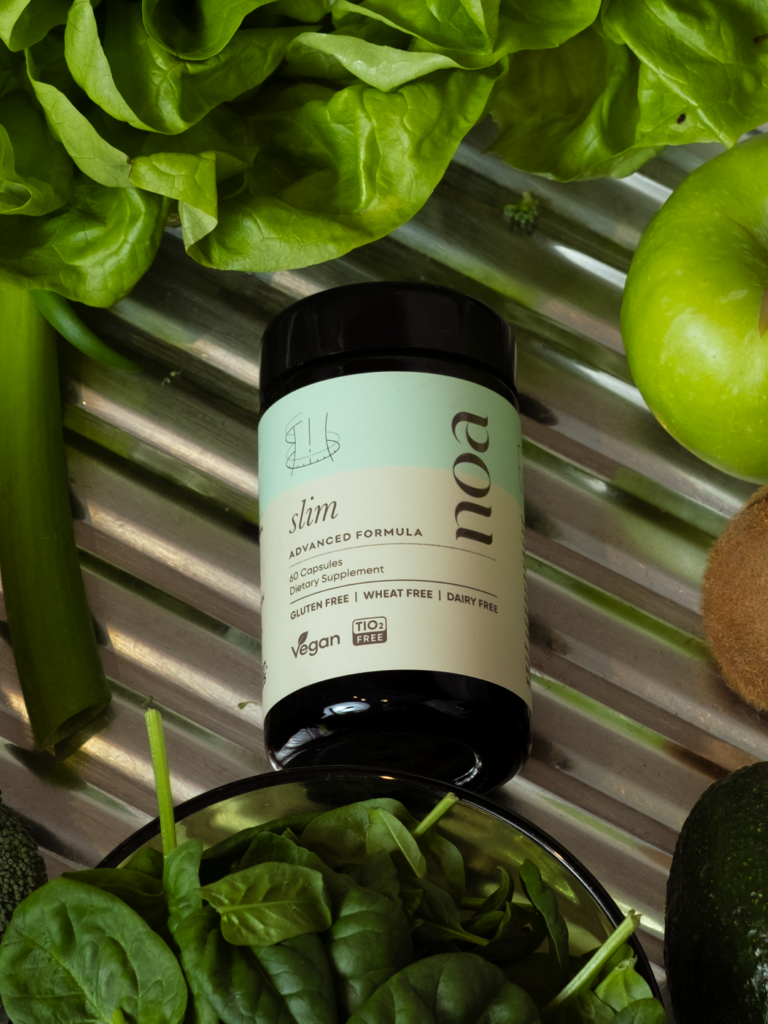
This is also how we think about NOA Slim. It is not designed to replace food, suppress normal hunger or turn an unbalanced diet into a balanced one. Its role is to support metabolism as part of a broader routine that already includes nutrition, movement and rest.
NOA Slim contains chromium, zinc and selected plant ingredients including green tea, cinnamon, ginger, cayenne, nettle and black pepper. Chromium contributes to normal macronutrient metabolism and the maintenance of normal blood glucose levels.
That means NOA Slim belongs alongside a well structured meal, not instead of one.
Protein and fibre help us think about what is on the plate. NOA Slim supports another part of the picture. Neither replaces the basic habits that matter most, and neither should be expected to make normal hunger disappear.
The most useful approach is usually the least dramatic one: support the body consistently rather than trying to outsmart it.
Building a More Satisfying Meal Does Not Need to Be Complicated
You do not need to calculate every gram of protein or fibre before sitting down to lunch.
A more practical approach is simply to look at the meal as a whole. Is there a meaningful source of protein? Is there a plant food providing fibre? Is there enough food to actually satisfy you? Does the meal contain something you genuinely enjoy eating?
A lunch built around chicken, fish, eggs, yoghurt, tofu, beans or lentils can provide protein. Vegetables, whole grains, pulses, fruit, nuts and seeds can contribute fibre. Carbohydrates and fats have their own important roles too.
The exact combination will look different for everyone.
What matters is moving away from the idea that the perfect meal needs to be restrictive, tiny or engineered to make you forget food exists.
A good meal should feed you.
That sounds obvious, but wellness culture occasionally needs reminding.
The Bigger Picture
The reason some meals keep you satisfied longer is not that they contain a secret ingredient. They are usually giving the body several things at once.
Protein can contribute to a more satisfying eating experience. Fibre can add volume and influence digestion. Fats and carbohydrates contribute energy and help make meals both nutritionally and practically complete. Sleep, stress, movement and the timing of previous meals influence the story too.
That is why appetite cannot be reduced to one rule.
If you are hungry again soon after eating, you do not necessarily need more willpower. Sometimes it is worth looking at what the meal actually contained.
Was there enough food? Was there protein? Was there fibre? Did you eat it in three minutes while answering emails?
The answer may be far simpler than another diet rule.
FAQ
Do protein rich meals keep you fuller for longer?
They can. Higher protein meals may increase short term feelings of fullness in some situations, although the size of the effect varies and depends on the whole meal and the individual.
Does fibre help with fullness?
Certain types of dietary fibre can support satiety through their effects on food volume, digestion and gut signalling. Different fibres behave differently, so variety is useful.
Should every meal contain protein and fibre?
There is no need to make every meal nutritionally identical. However, including sources of protein and fibre regularly can be a useful way to create balanced and satisfying meals.
Is being hungry between meals a bad sign?
No. Hunger is a normal physiological signal. How often it occurs varies depending on meal composition, activity, sleep, stress and individual needs.
Can NOA Slim suppress appetite?
NOA Slim is not positioned as an appetite suppressant. It is formulated to support normal metabolic processes as part of a balanced lifestyle.