Hair Density vs Hair Thickness: Why They’re Not the Same Thing
“My hair feels thinner” sounds like a simple sentence. In reality, it can mean several completely different things. Maybe there are fewer hairs growing in a certain area. Maybe the individual strands have become finer. Maybe the hair is breaking more easily, making the lengths look less full. Or perhaps your hair has always been fine, but you simply have a lot of it.
This is where two words that are often used interchangeably become important: density and thickness. They both influence how full hair looks, but they describe different characteristics of the hair. Understanding the difference can make it much easier to understand what you are actually seeing in the mirror and what kind of support makes sense.
Hair Density and Hair Thickness Are Not the Same Thing
Hair density generally refers to how many hairs are present within a particular area of the scalp. Hair thickness, on the other hand, usually refers to the diameter of an individual hair shaft. These are separate characteristics, even though both contribute to the overall appearance of fullness.
That means you can have fine individual strands but a high number of them, giving the appearance of quite full hair. You can also have relatively thick individual strands but fewer hairs overall, which may leave more of the scalp visible. And, of course, you can fall somewhere between the two.
This is why simply saying that someone has “thin hair” does not tell us very much. Are we talking about the size of each strand, the number of strands, or a change that has happened over time? Those are three different questions.
Fine Hair Can Still Be Dense
Fine hair has a smaller shaft diameter. It may feel softer and lighter, become weighed down more easily by products and sometimes appear flatter at the roots. But having fine hair does not automatically mean having sparse hair.
Someone can have thousands of fine strands growing closely together and have relatively high hair density. Visually, that can create plenty of fullness even though every individual strand is delicate. Conversely, someone with naturally coarse strands may still have lower density if fewer hairs are growing within the same area.
This distinction matters because we have become accustomed to treating “fine”, “thin” and “thinning” as though they describe the same thing. They do not. Fine hair can simply be your natural hair type. Thinning describes a change in the overall appearance or amount of hair and may deserve a different kind of attention.
Why Hair Can Start Looking Less Dense
Hair density is influenced by the number of hairs visible in a given area, but that appearance can change for several reasons. Normal hair cycling means individual hairs are constantly moving through stages of growth, transition, rest and shedding. When more hairs than usual enter the shedding phase, the overall appearance of density can temporarily change.
Age can also play a role. As we get older, changes can occur not only in pigmentation but also in the hair follicle and the characteristics of the hair shaft. Genetics, hormonal changes, general health, environmental exposure and lifestyle factors can all contribute to the way hair changes over time.
There are also medical forms of hair loss in which density or hair shaft characteristics can change. This is why a noticeably widening part, progressive thinning, bald patches or persistent excessive shedding should not automatically be treated as a cosmetic problem. A dermatologist can assess whether the change reflects normal variation, temporary shedding or something that requires further investigation.
Hair Thickness Can Change Too
The diameter of an individual strand is influenced strongly by genetics, but that does not mean it remains completely identical throughout life. The biology of the follicle, ageing and certain forms of hair loss can influence the diameter of hairs produced.
This is one reason hair specialists may look at both hair count and shaft diameter when assessing changes. Visible fullness is not determined by one single characteristic. It is the result of several factors working together, including density, strand diameter, length, texture and the condition of the hair fibre.
Then There Is Breakage
There is another reason hair can suddenly look thinner that has nothing to do with having fewer active follicles: breakage.
If strands repeatedly snap along the lengths, the ends may begin to look less full even though the number of hairs growing from the scalp has not necessarily changed. Heat styling, bleaching, chemical processing, mechanical tension and rough handling can all affect the physical condition of the hair shaft.
This is why it helps to pay attention to where the change is happening. More scalp showing around the parting is different from ends that have become noticeably sparse. Large amounts of full length hairs shedding from the root are different from small broken pieces appearing around the shoulders or sink.
They can look similar from a distance, but they are not the same process.
Why the Difference Matters for Haircare
If your hair is naturally fine, trying to turn each strand into genetically coarse hair is not a realistic goal. The better approach may be protecting delicate strands from unnecessary damage, choosing products that do not overwhelm them and supporting overall hair health.
If the issue is breakage, the focus shifts towards reducing physical damage and protecting the hair fibre. If there has been an actual change in density, particularly if it is persistent or progressive, understanding the cause becomes more important than simply trying to create the appearance of volume.
This is one of the reasons we prefer not to treat every hair concern as though it needs the same solution. “More hair” sounds simple. Hair biology rarely is.
Where NOA Hair Fits In
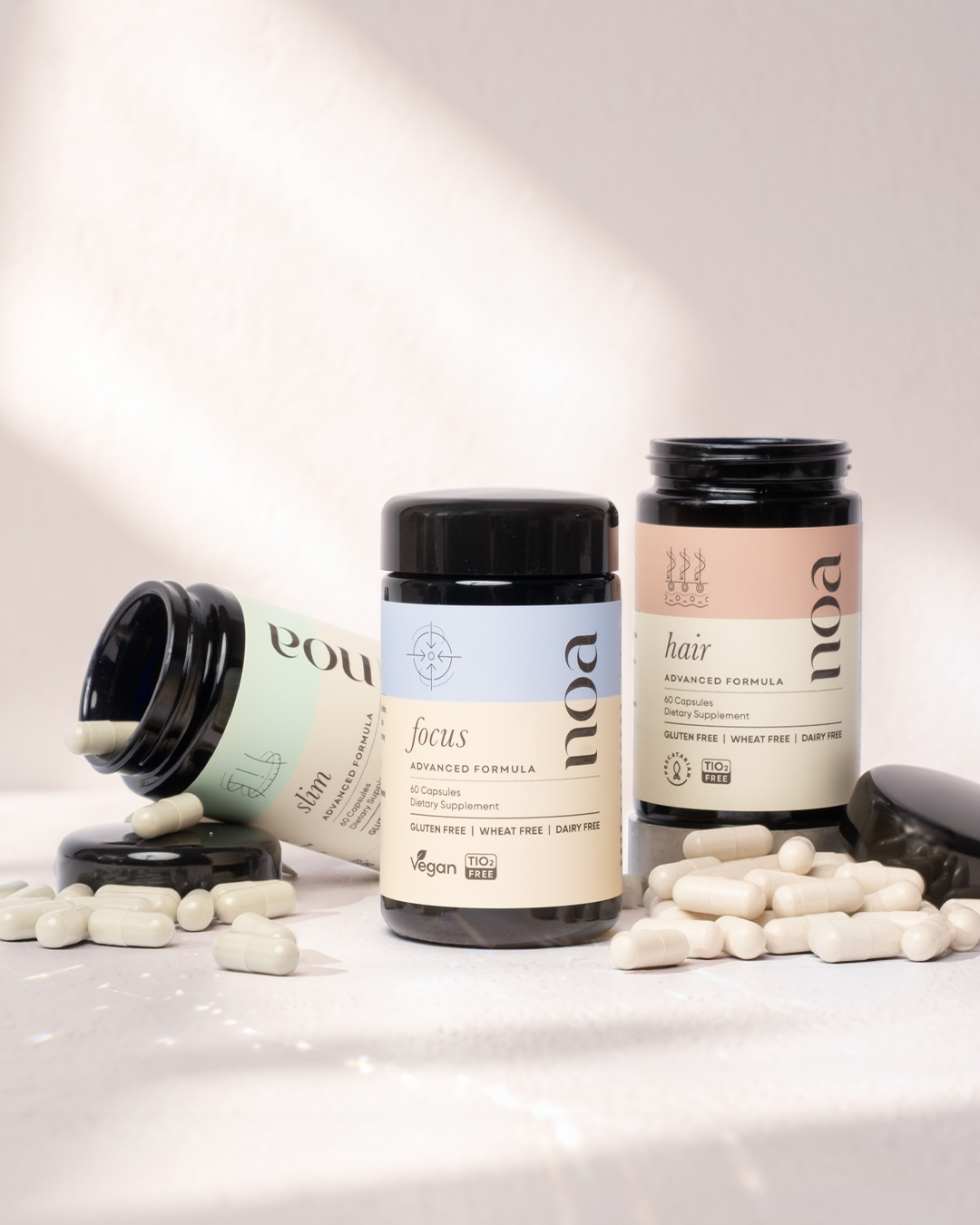
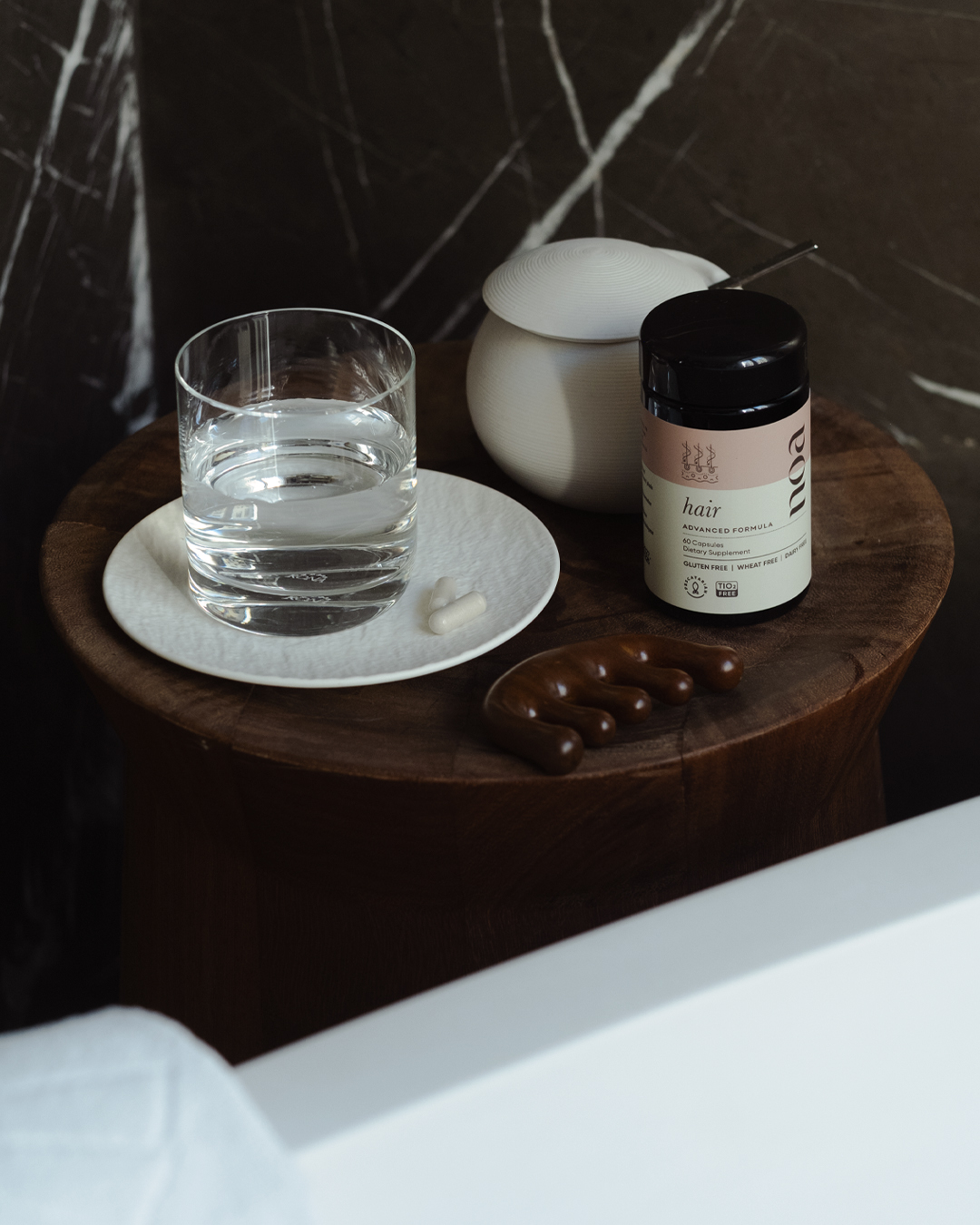
Nutrition is one part of the wider picture of normal hair health, which is where NOA Hair fits. The formula combines a range of vitamins, minerals and other selected ingredients, including biotin, selenium and zinc, which contribute to the maintenance of normal hair.
NOA Hair also contains ingredients including iron, vitamin C, copper, bamboo extract, MSM, hydrolysed fish collagen and quince fruit powder as part of its broader formulation.
What it should not be expected to do is change your genetically determined hair type overnight or create new follicles where they do not exist. Nutritional support makes most sense as part of a consistent routine that includes a varied diet, appropriate haircare and attention to any underlying reason for a noticeable change in the hair.
The goal is not to promise that every strand will suddenly become thicker. It is to support normal hair from within while treating the hair you already have with a little more understanding.
Your Ponytail Is Not a Scientific Measurement
It is easy to become hyper aware of hair once you start looking for changes. Suddenly the parting seems wider in one mirror, the ponytail feels smaller on Tuesday and a photograph taken under bright overhead lighting becomes evidence of something dramatic.
Lighting, hairstyle, angle, oiliness and the condition of the hair can all change how dense hair appears. That does not mean you should ignore a change you consistently notice. It simply means one bad hair day is not a diagnosis.
Looking at patterns over time is usually much more useful than examining a single photograph taken under unforgiving bathroom lighting.
The Bigger Picture
Hair fullness is not one thing. It is the combined result of how many hairs are growing, how thick those individual hairs are, how long and intact they remain, their texture and even the way they are styled. That is why two people can have completely different hair types while both describing their hair as “thin”.
Understanding the language gives us a better question to ask. Instead of simply saying, “My hair is thin”, ask what has actually changed. Have the strands always been fine? Does more scalp seem visible than before? Is the ponytail gradually becoming smaller? Are the lengths breaking? Has shedding noticeably increased?
Once you know what you are looking at, it becomes much easier to stop chasing every possible solution and start thinking about what your hair actually needs.
Because sometimes fine hair is simply fine hair.
And sometimes a change in fullness is worth looking at more closely.
FAQ
What is the difference between hair density and hair thickness?
Hair density refers to the number of hairs within a particular area of the scalp, while hair thickness generally refers to the diameter of an individual hair shaft. They are separate characteristics and both contribute to how full hair appears.
Can you have fine hair but high density?
Yes. Someone can have relatively fine individual strands but a large number of them, resulting in hair that still looks full.
Can hair density change over time?
Yes. Hair density can appear different because of changes in the hair cycle, ageing, temporary shedding or different forms of hair loss.
Can breakage make hair look less dense?
Yes. Breakage can reduce fullness through the lengths and ends even when the number of follicles producing hair at the scalp has not changed.
Can NOA Hair make individual hairs thicker?
NOA Hair should not be positioned as a product that guarantees an increase in hair shaft diameter or changes a genetically determined hair type. It is formulated to provide nutritional support for normal hair.
When should I speak to a professional about changes in density?
If you notice persistent or progressive thinning, a widening parting, bald patches, significant shedding, scalp symptoms or another unexplained change, a dermatologist or healthcare professional can help determine the cause.